Product — Nautilus - PTI

Fibre-Optic Pressure/Temperature Interrogator (PTI/PTG)

A surface-deployed demodulation instrument for Fabry-Pérot (FP) cavity and Fibre Bragg Grating (FBG) downhole pressure and temperature probes — developed for real-time, high-precision monitoring in oil and gas wells, in C-band and extended C+L band configurations.

Pressure accuracy
0.1% / 0.05% F.S.
Scan rate
0.1–20 kHz
Interrogation band
C or C+L (1525–1610 nm)
Probe compatibility
FP cavity & FBG

One interrogator for both FP-cavity and FBG downhole probes

The fibre-optic Pressure/Temperature Interrogator (PTI/PTG) is a surface-deployed demodulation instrument for Fabry-Pérot (FP) cavity and Fibre Bragg Grating (FBG) downhole pressure and temperature probes, developed for real-time, high-precision monitoring in oil and gas wells. The interrogator is offered in both C-band and extended C+L band configurations, allowing the instrument to be matched to the cavity-length range and dynamic-range requirements of the deployed probe, and is compatible with either FP-cavity or FBG probe technology without hardware modification.

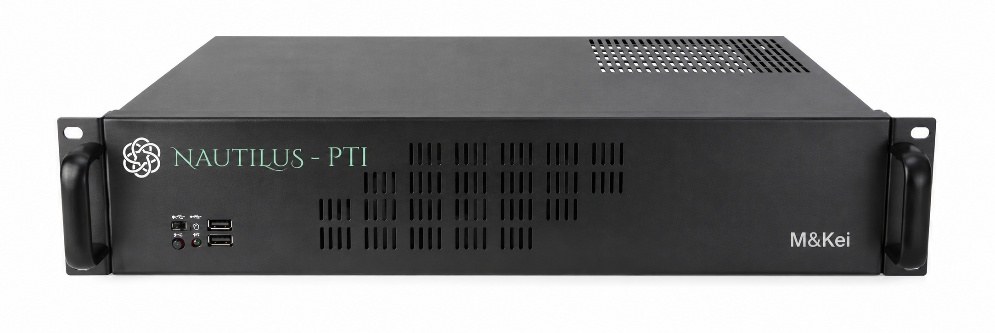
Nautilus PTI fibre-optic pressure and temperature interrogator — compact standalone unit

01Nautilus - PTI interrogator, compact standalone chassis (330 × 350 × 140 mm).

Specification

ModelNautilus – PTI - C  /  Nautilus – PTI - CL
Interrogation bandC-band (1530–1565 nm) / extended C+L band (1525–1610 nm)
Scan rate (single channel)0.1–20 kHz
Sampling rate20 kS/s
Wavelength accuracy±1 pm
Demodulation stability±0.1 nm
Spectral resolution≤5 pm
Compatible cavity length range50–500 μm (corresponding FSR ≈ 25–4 nm)
Probe compatibilityFabry-Pérot (FP) cavity and FBG probes
Pressure measurement accuracy0.1% F.S. (PTI - C) / 0.05% F.S. (PTI - CL)
Temperature measurement accuracy±0.5 °C
Number of channels1 (expandable to 4)
Fibre / connector typeSingle-mode / E2000/APC
Data storage1 TB (local)
Communication interfaceModbus RTU/TCP, TCP/IP, USB (configurable on request)
Storage environment–20 °C to 55 °C, ≤90% RH
Operating environment–10 °C to 40 °C, ≤90% RH
Power supplyDC 5 V, 3 A
External dimensions330 × 350 × 140 mm (standard)

Full-spectrum scanning interferometric demodulation

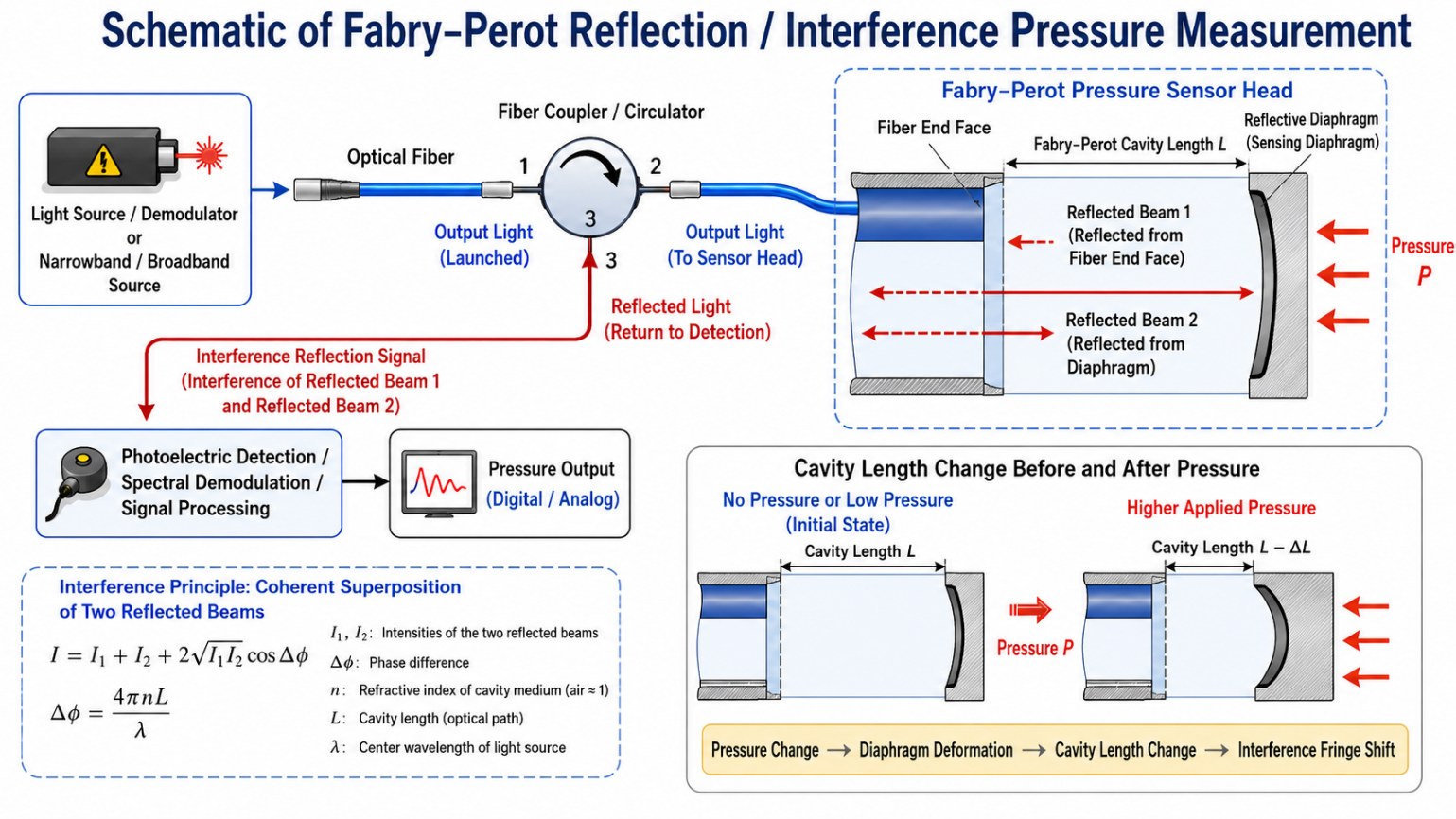
The interrogator employs a full-spectrum scanning interferometric demodulation architecture based on the Fabry-Pérot cavity principle. The instrument continuously and densely samples the interference spectrum across the C-band or, in the extended configuration, the combined C+L band (1525–1610 nm). By extracting the positions of multiple interference fringes (peaks and troughs) within the acquired spectrum, the system reconstructs the variation in FP cavity length, from which pressure and temperature are derived with high precision.

Relative to conventional electronic transducers, fibre-optic FP sensors offer superior mechanical stability, stronger immunity to electromagnetic and environmental interference, and enhanced high-temperature tolerance, enabling high-precision, low-drift measurement over extended deployment periods under extreme downhole conditions. The full-spectrum scanning architecture offers the following advantages over narrowband, single-peak-tracking demodulation schemes:

The downhole probe employs a compact, highly integrated design that combines high reliability with ease of installation, while the surface interrogator supports raw spectral data export, extensive data-processing capability, and remote-monitoring functionality to meet the long-term production-monitoring requirements of modern oil and gas operations.
Key features

Typical applications

Fabry-Pérot (FP) Cavity Pressure Probe

Operating principle — The probe uses a miniature Fabry-Pérot cavity formed between two reflective surfaces at the sensor tip. Applied pressure deforms a diaphragm, changing the cavity length; this length change is demodulated by the interrogator to derive pressure.

Diagram of the Fabry-Pérot cavity pressure probe operating principle, showing diaphragm deflection changing the cavity length

02FP-cavity probe operating principle — diaphragm deflection under applied pressure changes the cavity length read by the interrogator.

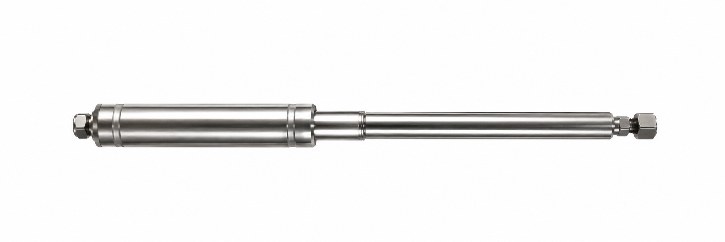
Fabry-Pérot cavity downhole pressure probe hardware

03FP-cavity downhole pressure probe.

Key features

Data sheet

Sensing principleFabry-Pérot (FP) cavity, diaphragm deflection
Pressure range0–70 MPa
Pressure accuracy0.1% FS
Temperature range–40 °C to 150 °C
Temperature accuracy±0.5 °C
Fibre/connector typeSplicing
Probe diameterCustomisable per application

Fibre Bragg Grating (FBG) Pressure Probe

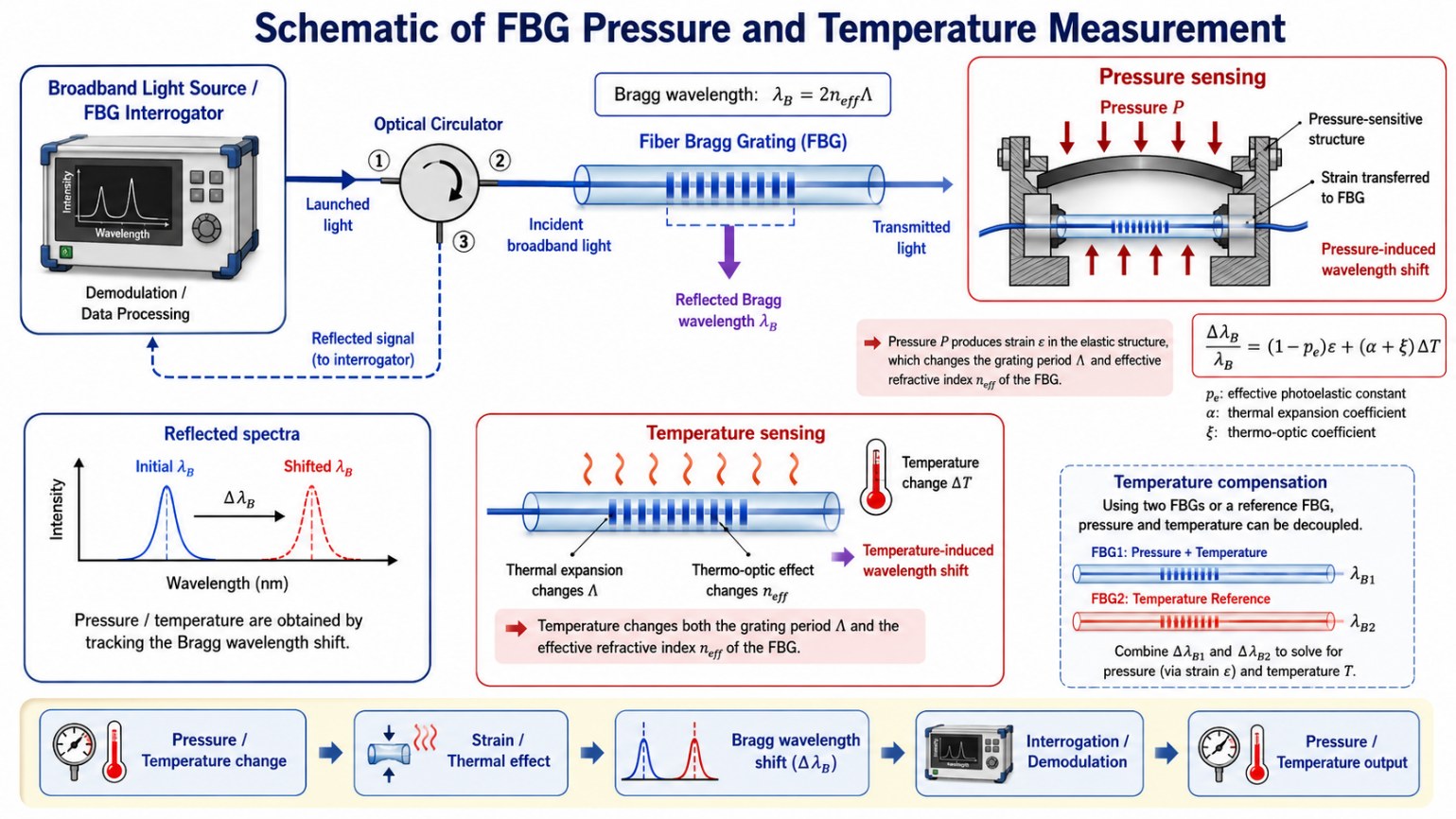
Operating principle — The probe incorporates an FBG bonded to a pressure-sensitive elastic element (diaphragm or piston). Applied pressure induces strain on the grating, shifting its reflected Bragg wavelength; the interrogator tracks this wavelength shift to derive pressure.

Diagram of the fibre Bragg grating pressure probe operating principle, showing strain-induced Bragg wavelength shift

04FBG probe operating principle — pressure-induced strain on the grating shifts the reflected Bragg wavelength.

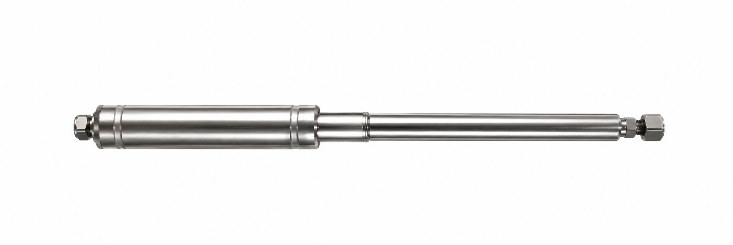
Fibre Bragg grating downhole pressure probe hardware

05FBG downhole pressure probe.

Key features

Data sheet

Sensing principleFibre Bragg Grating (FBG), strain-to-wavelength transduction
Pressure range0–70 MPa
Pressure accuracy0.5% FS
Temperature range–40 °C to 150 °C
Temperature accuracy±0.5 °C
Fibre/connector typeSplicing
Multiplexing capabilityMultiple probes per fibre (WDM)

Specifying downhole pressure & temperature monitoring?

Talk to us about probe selection, cavity-length matching, and multi-well cascading for your HPHT or long-term production monitoring programme.

Talk to us See all technologies