M&Kei led the industrial design, mechanical structure, and brand-facing visual development for a full line of optical interrogator hardware — covering DTS, DAS, and FBG/FP-cavity demodulation systems.
The client had developed working DTS, DAS, and FBG/FP-cavity interrogator electronics across multiple product lines, but each unit had been housed and styled independently as it was developed. M&Kei was brought in to unify the lineup under a single, recognisable design system — and to take the chassis design, panel layout, and supporting brand materials from concept through to manufacturable detail.
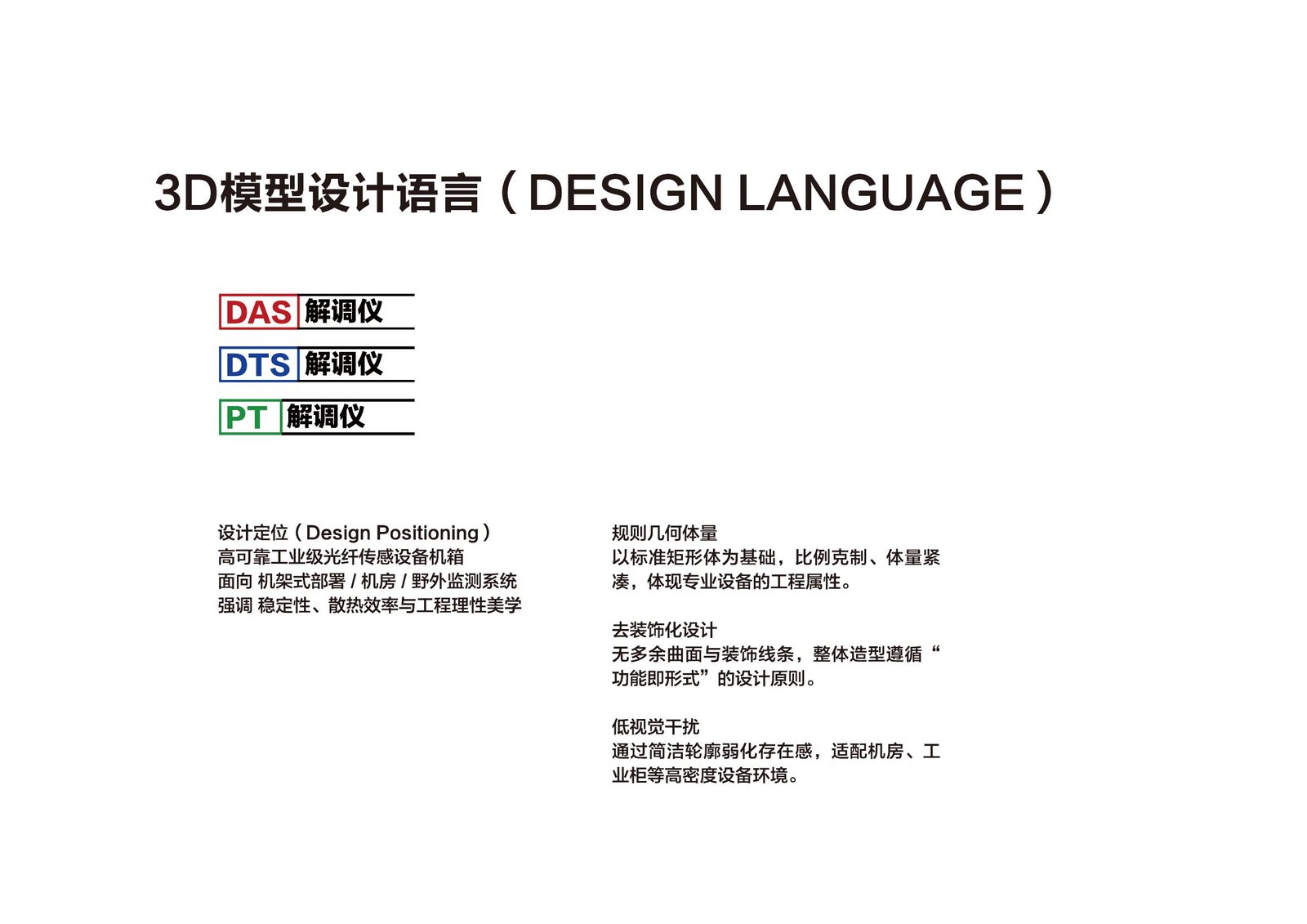
Before any single enclosure was finalised, M&Kei defined the design positioning that would carry across the DAS, DTS, and FP-cavity interrogator ranges: a high-reliability industrial chassis aesthetic suited to rack-mounted, machine-room, and unattended field-monitoring environments — built on clean rectilinear volumes, minimal ornamentation, and proportions that read as precision instrumentation rather than generic IT hardware.
01Design positioning brief — geometric principles, anti-interference visual cues, and the shared proportion system applied across the DAS / DTS / PT interrogator ranges.
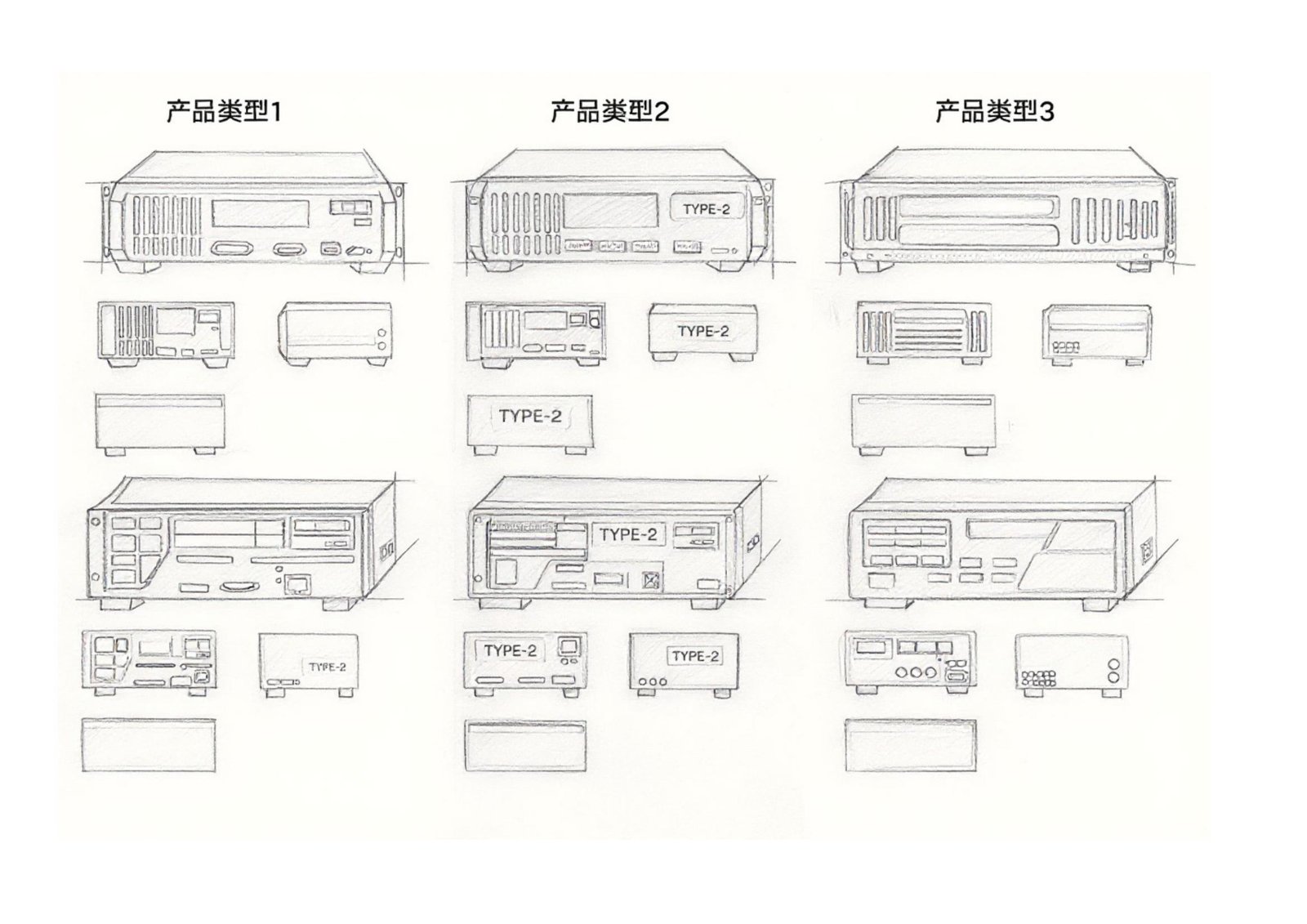
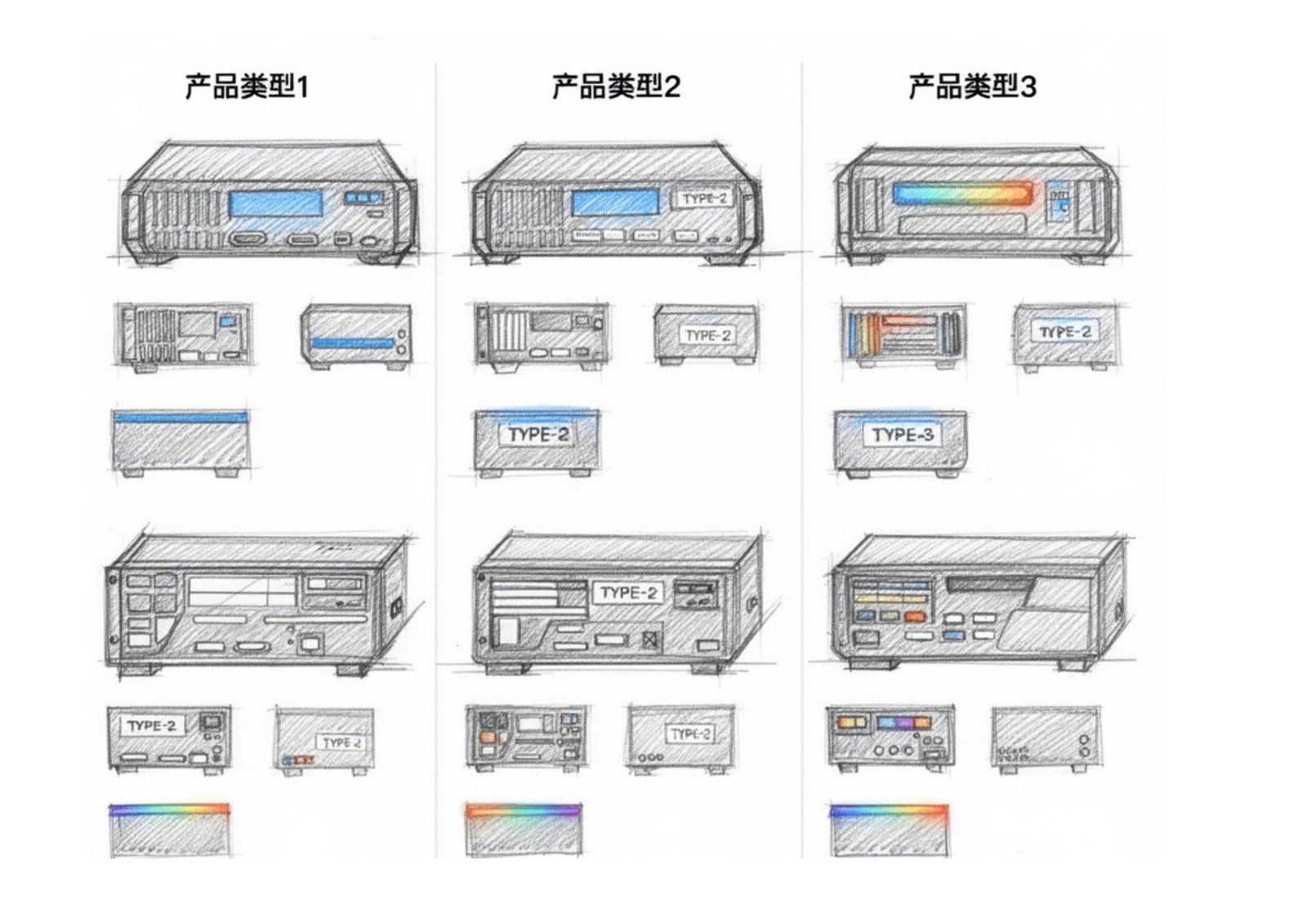
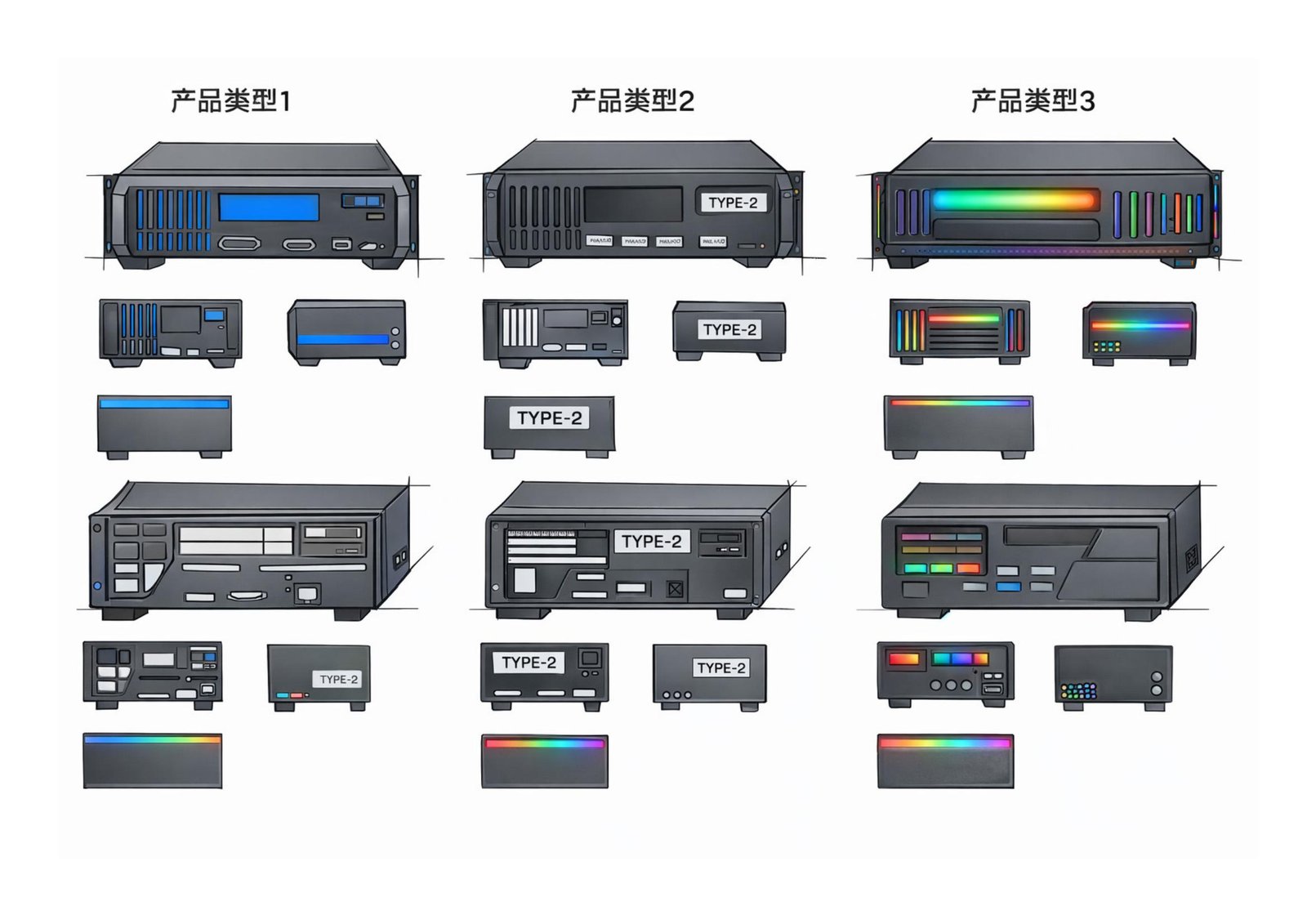
Each product type went through a structured design pass: line-art exploration to settle proportion and panel composition, a colour and material validation stage, then a fully rendered final form — repeated in parallel across three product types so the family stayed visually consistent end to end.
02Line-art stage — three product type variants developed in parallel, establishing chassis proportion and panel composition before any colour or material decisions.
03Colour validation — accent treatments tested against the resolved chassis form, including a spectrum-light motif explored for the optical sensing product line.
04Final render — resolved colour and material treatment carried through to presentation-quality visualisation for internal sign-off.
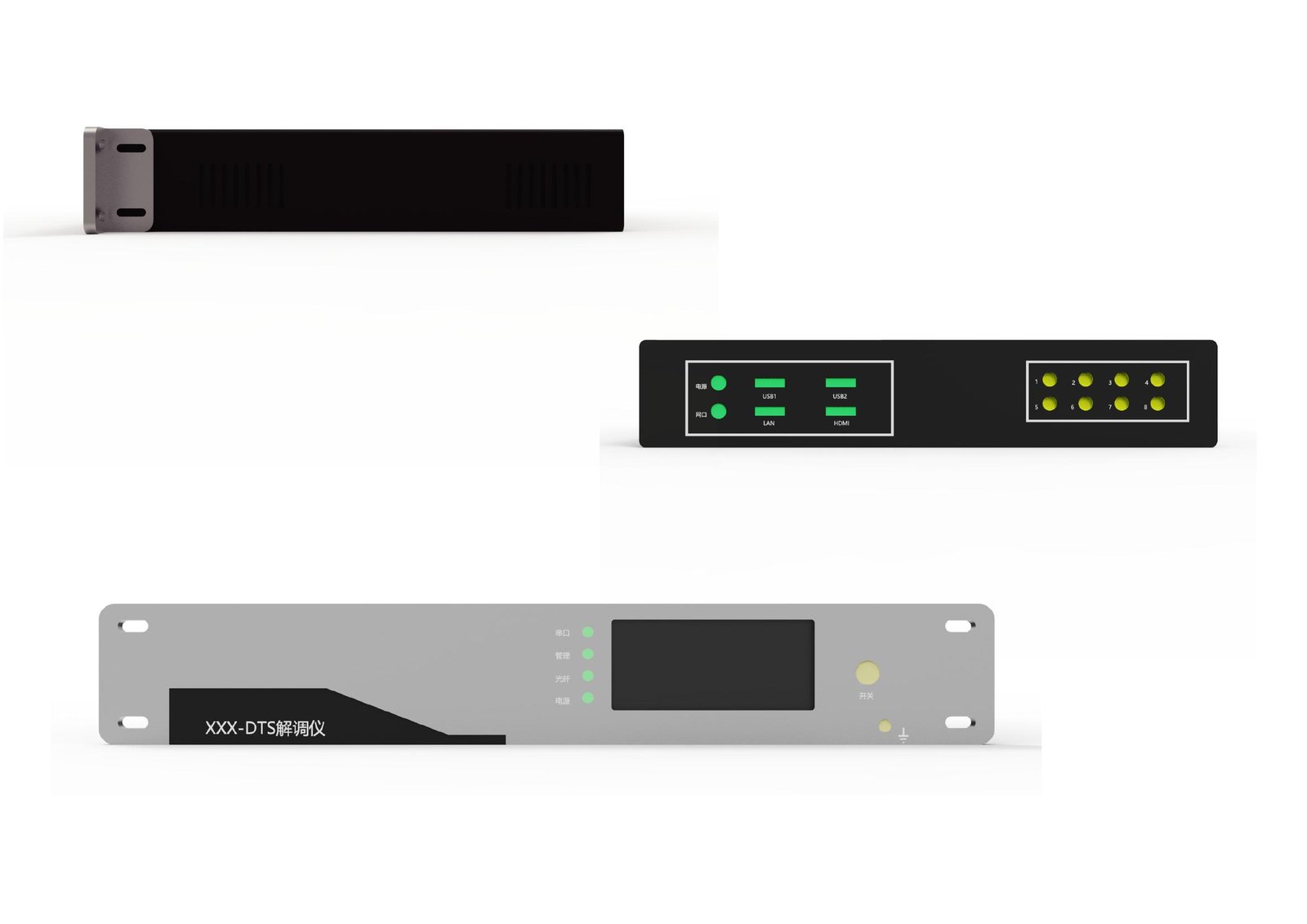
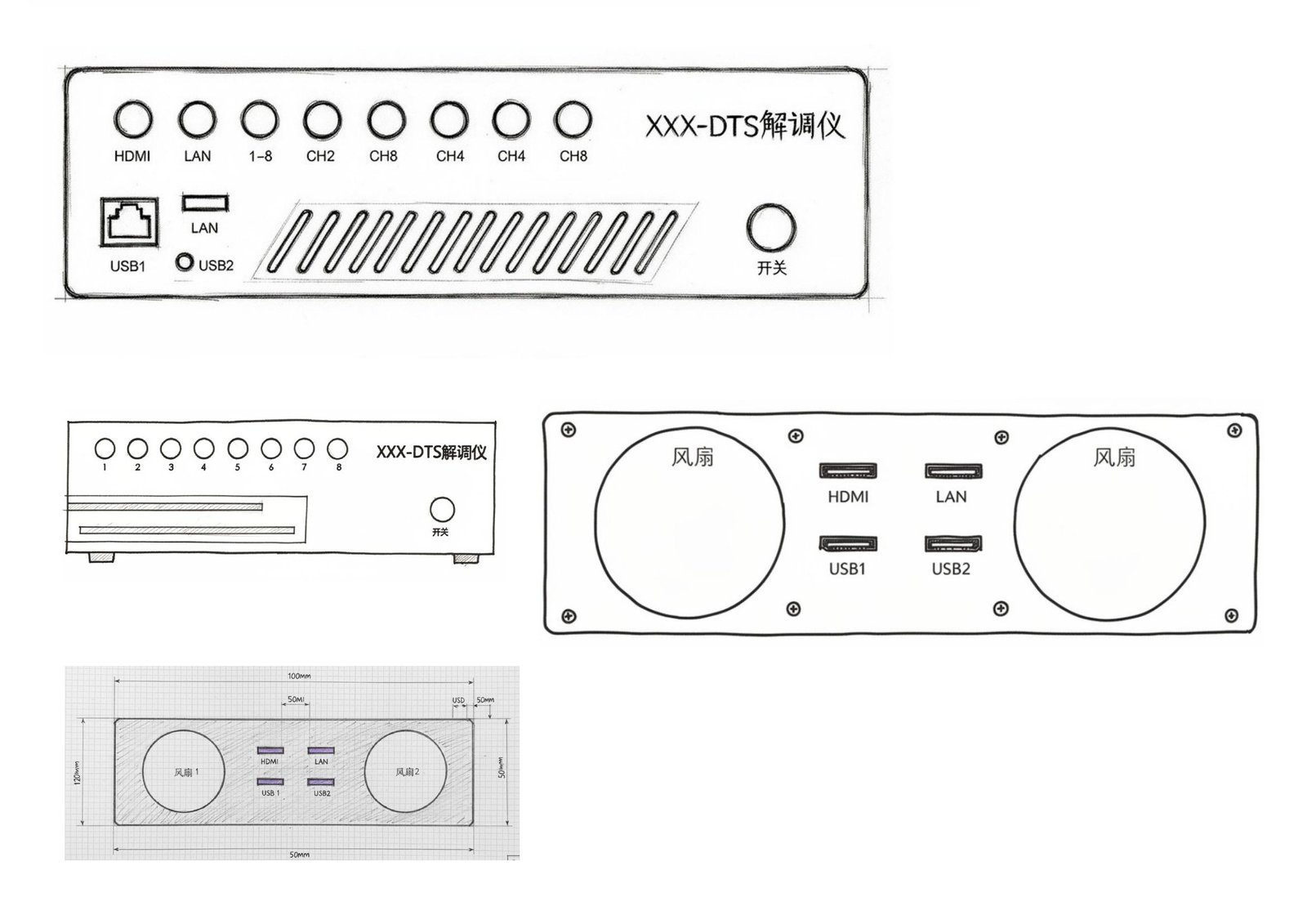
Visual design had to resolve into a chassis that a contract manufacturer could actually build. That meant working through connector placement, ventilation, and indicator layout panel-by-panel, then locking every opening and clearance to a dimensioned drawing.
05Front panel render — power, network, and status indicator placement resolved for the rack-mount chassis.
06Dimensioned rear panel drawing — port placement, dual-fan ventilation, and millimetre-accurate clearances handed off for manufacturing.
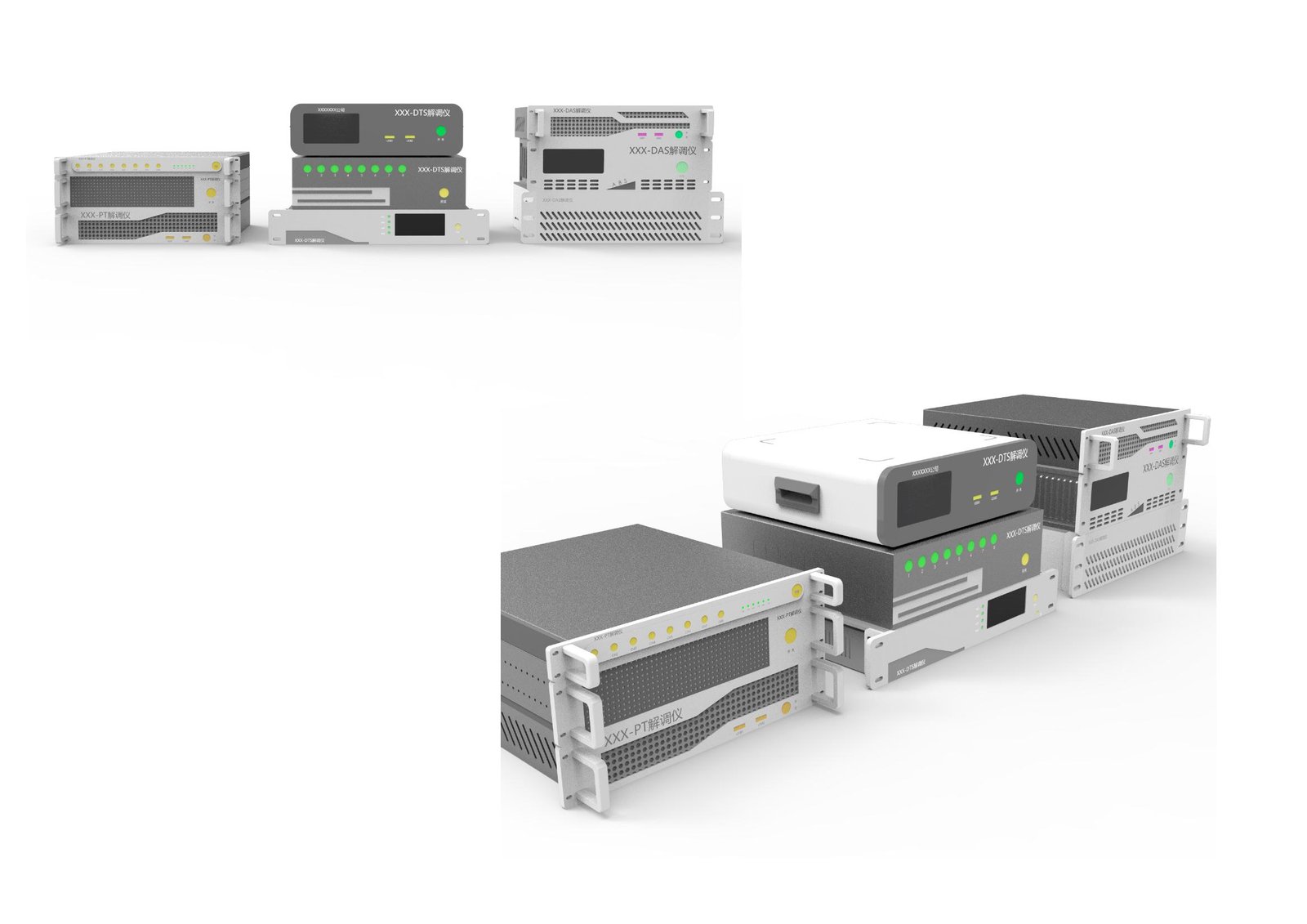
The result is a visually unified hardware lineup spanning rack-mount and compact standalone form factors — sharing the same design DNA across DTS, DAS, and PT interrogator units, so new SKUs can be added to the range without breaking the visual system.
07Full product family render — rack-mount and standalone units sharing one design language across the DTS, DAS, and PT interrogator ranges.
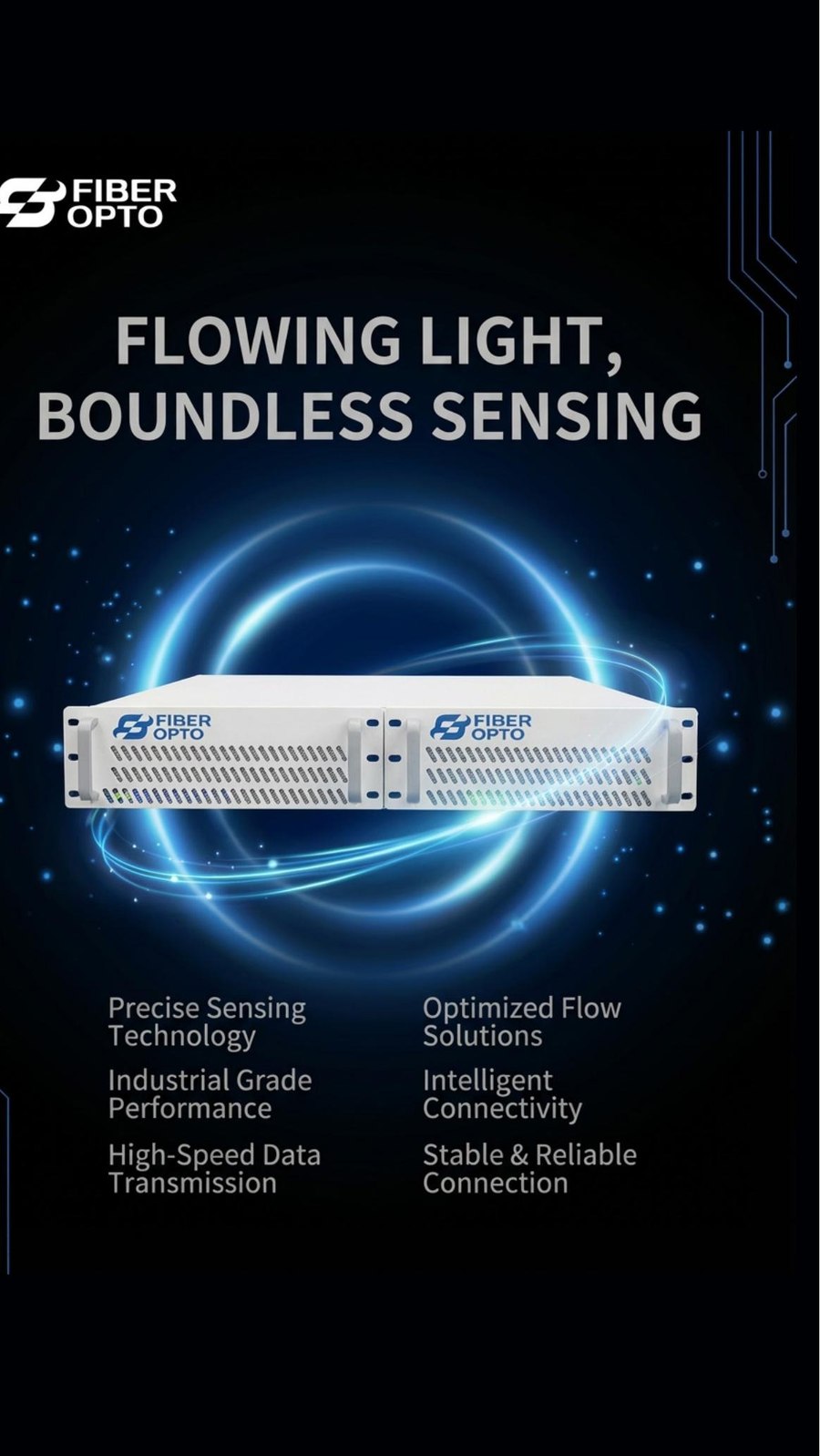
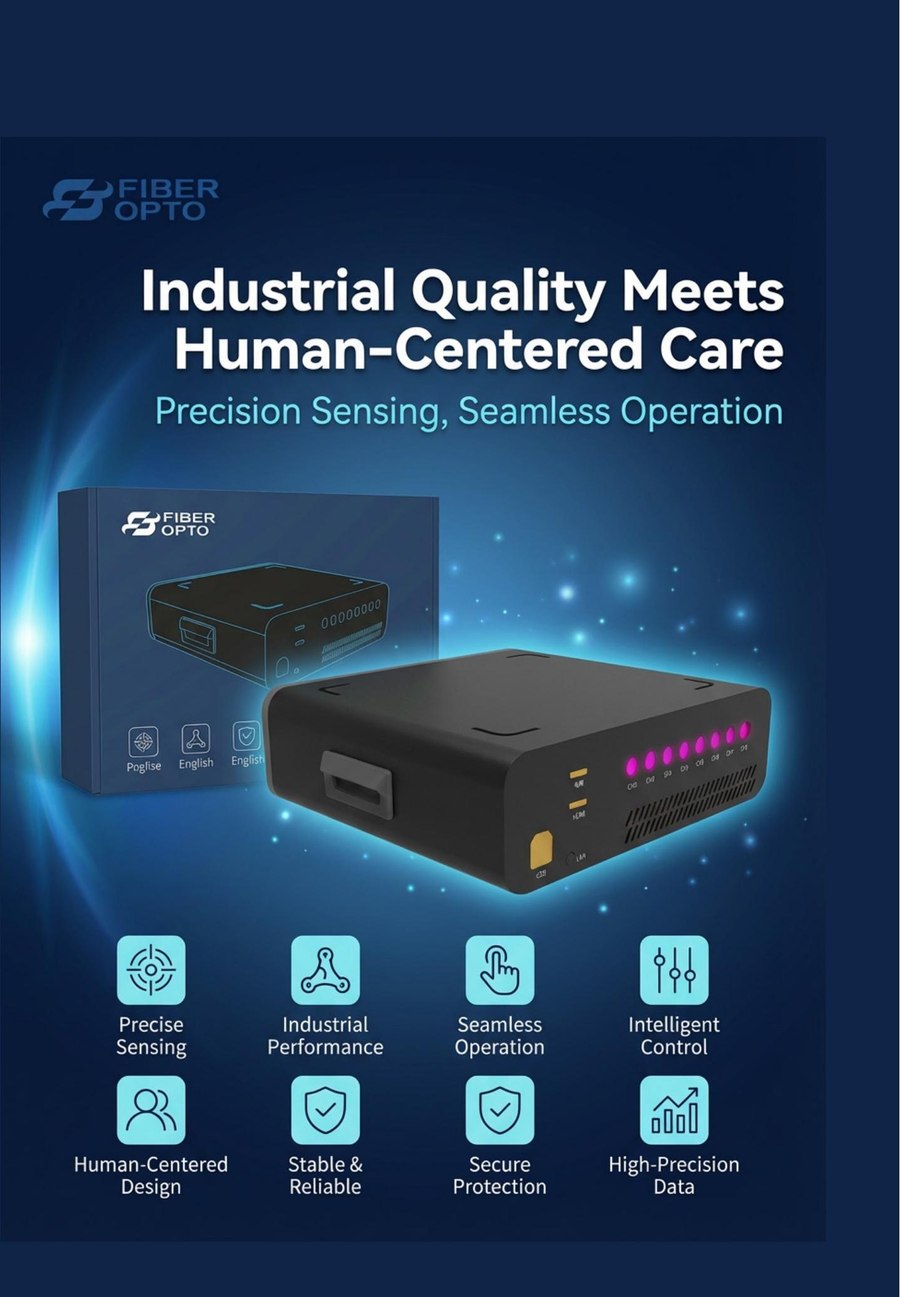
Beyond the hardware itself, M&Kei produced bilingual product posters that carried the visual language of the chassis design — the same proportion, lighting, and colour treatment — into marketing-ready collateral for the client's launch materials.
08Product poster — rack-mount interrogator, flowing-light motif emphasising continuous fiber sensing.
09Product poster — compact standalone unit, shown alongside its retail packaging design.
The client's production brand name has been withheld at the client's request; the manufacturer-supplied logo and packaging shown above are retained as delivered. All hardware renderings elsewhere on this page use placeholder model labelling in place of the production brand name.
Whether you're starting from a working prototype or a blank sheet, we can take your interrogator hardware from design language through to a manufacturable, branded product line.
Talk to us See our services